
How Much Do Custom Plush Toys Cost?

A Buyer’s Guide to Unit Price and Total Project Budget
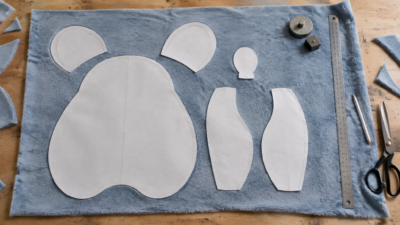
There is no useful single price for “a custom plush toy” without a product specification and an order scope. Two toys of the same height can require different amounts of fabric, different pattern work, different embroidery, and very different finishing time. Two quotations for the same design can also look far apart because one includes packaging or testing support while the other does not.
For a brand or importer planning a custom plush order, the better question is: What exactly does this unit price buy, and what will the full project cost before the goods are ready for our chosen destination?
Start with three separate amounts:
- Bulk manufacturing unit price: The supplier’s price for one finished plush under a stated specification, quantity, packing scope and delivery term.
- One-time or project-specific expenses: Development, artwork preparation, new tooling if applicable, separate approvals, testing or other agreed charges that are not already included in the bulk price.
- Total procurement or landed budget: All applicable spend to make the order available at the buyer’s agreed destination, including freight and import-related items where the buyer is responsible for them.
A budget is only comparable when each supplier uses the same product version, order quantity, SKU allocation and delivery scope. This guide explains the manufacturing cost drivers, shows how to organize the numbers, and gives buyers a way to compare quotations without assuming a published price range applies to every project.
The Short Answer: What Changes a Custom Plush Toy’s Unit Price?
The main variables are the finished dimensions and shape; pattern pieces and assembly work; material and filling specifications; embroidery, printing and accessories; quantity per design or SKU; branding and packaging; and the inspection or other project requirements included in the offer. Delivery terms can change the amount shown on a quote without changing how the toy itself is made.
| Price driver | What the buyer should define | Why two quotations may differ |
|---|---|---|
| Size and finished form | Height, width, depth, pose and measurement method | Different fabric area, filling, cutting layout and packing volume |
| Pattern and workmanship | Silhouette, panels, small features, seams and assembly method | Different cutting, matching, sewing and finishing work |
| Fabrics and filling | Texture, pile, stretch, color direction, firmness and material reference | Different sourcing, usable yield and construction behavior |
| Decoration and extras | Embroidery, print, appliqué, labels, clothing and attachments | Different setup, component and placement-control work |
| Quantity and SKU plan | Units per design, colorway or size, not only total order units | Different setup allocation and purchasing conditions |
| Packing and delivery | Individual packing, retail box, carton scope and delivery term | Different goods scope, carton volume and freight responsibility |
This table explains the levers; it is not a rate card. An actual project price requires a reviewed design and a written quotation.
First, Identify Which “Price” the Supplier Is Quoting
A factory unit price is not automatically the same as the amount a retailer, campaign manager or importer should reserve for the project. Ask the supplier to label the commercial basis of its offer before debating whether the number is high or low.
A manufacturing quotation may cover the sewn toy, its agreed components and a specified form of basic packing. Another quotation may include custom tags or retail boxes. A third may group some development expenses into the bulk unit price rather than showing them separately. None of these presentations is inherently wrong, but they are not comparable until the inclusions match.
Manufacturing Price Versus One-Time Development Expense
A one-off prototype may involve pattern interpretation, small-quantity material preparation and revision work. Those expenses should not be silently counted twice in a budget. If the supplier charges development separately, show it on a separate line. If it has already been absorbed into the bulk quotation, do not add the same development work again.
For a closer look at what a prototype fee may cover, keep that as a separate decision from the bulk quote. Before moving into bulk production, the approved design reference and commercial scope also need to describe the same item.
Factory Price Versus Landed Budget
A manufacturing-only quotation does not necessarily include freight, insurance, import duties, customs handling, local delivery or taxes. Their treatment depends on the agreed delivery term, destination and the buyer’s actual obligations. Ask which party arranges and pays for each part of the journey; do not infer it from an unlabeled number. Confirm the named place as well as the trade term: a short term label alone may not make the delivery boundary sufficiently clear for comparison.
A useful comparison asks: “Price per unit delivered where, in which packing format, with which charges included?” If two offers stop at different points in the supply chain, their quoted amounts do not measure the same purchase.
How the Design Changes Manufacturing Cost
1. Finished Size, Shape and Fabric Yield
A larger toy commonly needs more fabric and filling, but height alone is a poor pricing specification. A wide seated character may have different material consumption from a tall narrow character. Ears, wings, tails and irregular edges also change how pattern pieces fit onto fabric.
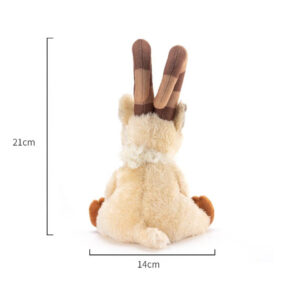
Ask the supplier to quote against a defined finished size and pose, not a casual description such as “medium plush.” For an upright mascot, record the intended standing height and whether an attached hat counts. For a seated animal, agree whether the measurement includes the ears, the seated body or a hanging attachment. This avoids comparing quotes for different finished products while assuming they are identical.
The cutting layout matters too. Fabrics may have pile direction, stretch or a printed motif that limits how a pattern piece can be rotated. The usable fabric area may be less than a buyer expects from a simple width-by-height calculation. A lower-priced substitute can become less economical if it changes yield or requires a construction adjustment.
2. Pattern Pieces, Sewing Operations and Hand Finishing
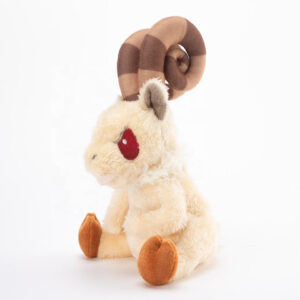
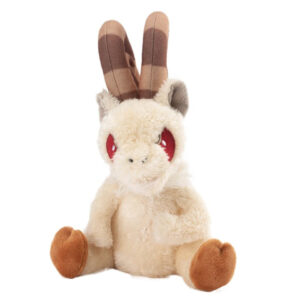
An original character must become a three-dimensional sewn object. A relatively simple plush body may be easier to repeat than a character with layered cheeks, shaped paws, fitted clothing, separate horns or multiple color-block panels. More construction details can mean additional cutting, sewing, alignment and finishing steps.
The number of panels is not a universal quality score. Some details are essential to the recognizable silhouette; others can be represented with a surface decoration or a simpler seam arrangement. If price is a constraint, ask which construction changes preserve the visual features that matter to the brand. Make that decision against artwork and a physical sample rather than assuming that fewer seams always produce the same result.
3. Fabric Choice, Colors and Filling
Fabric changes both the unit cost and the appearance of a plush character. Discuss the desired hand-feel, pile length, color reference, stretch and how the textile behaves around embroidery or curved seams. A fabric that looks similar on a phone screen may look or feel different as a physical swatch.
Cost can change when a project needs a specialized texture, a separately sourced color or additional fabric types. It can also change if a supplier must purchase more material than the order consumes. The important question is not simply “Which fabric is cheapest?” but “Which approved option delivers the character’s intended look, feel and project requirements?”
Filling deserves its own specification. The amount and distribution affect the shape, firmness, seated posture and packing behavior of the finished product. Asking to remove filling without checking the sample can change the product the buyer is actually purchasing.
4. Embroidery, Printing, Appliqué and Branding
A simple face can be executed in different ways, but the methods are not interchangeable in every design. Dense embroidery takes machine work and placement control; printing may need artwork setup and compatibility review with the fabric; appliqué adds pieces and sewing operations. A logo on the body, a woven label in a seam and a printed retail tag are also different scopes.
When comparing prices, mark what is included where, not merely “logo included.” Specify approximate location and dimensions, required colors, whether clothing or accessories carry the branding, and whether the decoration appears on every SKU. A supplier may need to propose a change when small details are not well suited to the intended textile or finished size.
5. Clothing, Accessories and Special Functions
An attached bow and a fitted removable outfit are different manufacturing tasks. A keychain attachment, internal insert or electronic feature can introduce component purchasing, assembly and project-specific review requirements. Do not assume the price of a plain stuffed body covers them.
For every accessory, ask whether it is permanently attached or detachable, which materials and branding are included, whether it is part of the approved reference, and whether it needs separate packing or inspection. Evaluate any proposed simplification against intended use and applicable product requirements, not only price.
Quantity Changes Unit Economics, but MOQ and Price Are Different Questions
A supplier may spread preparation work over the units in a manufacturing run, and material purchasing conditions may change at different quantities. That can alter the unit quotation. It does not tell you whether buying more will improve the project’s economics once cash committed and inventory risk are considered.
For instance, one original mascot in a single colorway is not automatically equivalent to a collection divided among several characters and packaging variants, even when both projects contain the same total unit count. Each distinct pattern, fabric combination, decoration or retail SKU can require separate coordination.
Ask for a quantity-based price comparison at the same approved specification and on the same SKU split. If a price tier assumes one design while the buyer plans several, it is not a valid comparison. For a focused explanation of what actually sets the minimum feasible quantity, use a separate MOQ guide rather than treating MOQ as the same question as total project cost.
Higher quantity may lower a quoted unit price and still increase the total funds the buyer must commit. Choose a purchase plan using expected demand, storage, cash-flow tolerance and the actual quoted tiers—not an assumed universal discount curve.
Packaging Can Change Both Manufacturing Scope and Delivery Cost
A plush intended for retail display may need branded tags, a printed box, protective inserts, barcode placement or a specific pack-out orientation. A promotional giveaway may need a different presentation. Decide the direction early, because “standard packing” can mean different things to different suppliers.
Packaging has two effects buyers should evaluate separately. It adds materials and packing work where included in the product scope. It also changes carton count and shipment volume, which can affect freight, storage and fulfilment. A lower unit quote based on simpler packing may not be a lower complete project cost if the buyer must add retail packaging elsewhere.
Ask whether the quotation includes a packaging sample or proof, whether packaging artwork is approved, how multiple SKUs are marked, and whether master cartons and export pack-out have been included. Do not assume every sample or production approval automatically includes retail packaging approval.
Quality, Market Requirements and Inspection Belong in the Budget
The lowest quoted manufacturing price is not a useful comparison if the proposed products, workmanship expectations or inspection scopes differ. An inspection arranged directly by the buyer may be absent from the factory invoice yet remain part of the buyer’s project budget. Describe the visual and physical features that must match the approved sample, the required packaging presentation, and which party will coordinate inspections and any applicable product-specific testing or documentation.
The target market, intended users, materials and construction can influence what needs review. Avoid assuming that an unrelated supplier certificate or a prior product report proves compliance for the new toy. Establish the project’s testing and documentation responsibilities before placing the purchase order, and confirm whether those expenses are included, estimated separately or arranged by the buyer.
This is a costing question, not a reason to compromise safety or claim that every product requires the same test. A lower-priced proposal should be compared against the same agreed product and project requirements.
Compare Two Plush Quotations Using One Scope Sheet
A fair comparison is not “Supplier A quoted less per toy.” It is “Both suppliers quoted the same approved product version and delivery scope, and we know which expenses are inside or outside each offer.” Start by locking a comparison baseline and sending identical questions.
| Comparison field | Common reference to send both suppliers | What to confirm in each reply |
|---|---|---|
| Artwork and sample | Current design version and approved reference status | Which revision the price is based on |
| Product | Finished dimensions, pose, materials and filling direction | Deviations, assumptions or proposed alternatives |
| Decoration | Embroidery, print, labels, accessories and clothing | Included locations and methods |
| Order | Total units and units per SKU/colorway | Price basis, quantity tiers and mixed-SKU terms |
| Packing | Individual pack, retail elements and carton instructions | Included packing and separately quoted additions |
| Product review | Market/use context and buyer inspection expectations | Test, document and inspection responsibilities |
| Commercial basis | Quotation currency, validity and delivery destination | Named delivery term and precise inclusion/exclusion list |
| Changes | Current open decisions | What triggers a written revised quotation |
If the artwork is not yet fully approved, request a clearly labeled provisional estimate. It should list assumptions and the items that will be repriced after sampling. A provisional estimate is useful for planning, but it should not be mistaken for a price commitment against a design that has not been finalized. If an accelerated launch is being considered, request any rush-work or upgraded-freight option as a separate scenario with its own scope rather than assuming the standard offer includes it.
The existing custom plush RFQ checklist can help you assemble the broader project brief before asking suppliers to quote against it
Build a Total Project Budget Without Counting Charges Twice
Once scope is comparable, build a worksheet from actual written amounts rather than borrowing a generic internet price range. You may be purchasing one SKU or several; keep each manufacturing subtotal separate until the full order is summarized.
| Budget line | Buyer worksheet entry | Double-counting check |
|---|---|---|
| Bulk goods | Quoted unit price × units for each SKU | Check whether packing or development is already included |
| Development | Separately agreed pattern/sample charges | Do not add again if credited or included under the agreed terms |
| Branding and packaging | Separately quoted tags, boxes, inserts or design work | Exclude amounts already in the bulk unit price |
| Product verification | Agreed testing, inspection or documentation expense | Record which party pays and when it occurs |
| Freight and import | Freight, insurance, duties, handling and delivery where applicable | Match the named delivery term; avoid adding supplier-paid charges twice |
| Contingency | Buyer-controlled allowance for unresolved scope or approved changes | Not a supplier fee and not a promised cost percentage |
Project procurement budget = the sum of applicable, non-duplicated charges for the agreed scope. If you also want an effective cost per usable item, divide that budget by the quantity actually accepted and usable for the intended sale or distribution. Keep recoverable taxes or other accounting-specific items in the format your finance team uses; do not assume they belong in every buyer’s cost calculation.
A useful worksheet has columns for confirmed quote, provisional estimate, excluded, buyer-arranged and still unknown. That prevents a blank cell from being misread as “free.” Keep the contingency allowance visibly separate from charges already committed: it belongs in a planning budget, but unspent contingency is not an actual supplier expense. After goods are accepted, replace estimates with incurred amounts and divide by the accepted usable quantity to calculate a realized effective cost. Before delivery, use an explicitly labeled forecast quantity rather than pretending the accepted quantity is known. This also makes it easier to compare an early concept budget with the amount approved for purchase.
A Non-Numerical Example: Why the Lower Unit Quote May Not Be the Lower Project Cost
Imagine two suppliers quoting the same character. One includes a basic individual pack and states that branded retail boxes, an external inspection and freight are separate. The other includes the agreed retail packing and a different delivery scope. Their unit prices answer different questions. Add only the missing, buyer-responsible items to a normalized comparison before choosing a supplier.
This is a hypothetical scope comparison, not an actual MSXTOYS customer case or historical quotation. A proper decision also weighs the approved product, evidence of manufacturing responsibility and the buyer’s acceptable delivery and inventory risk.
Five Ways to Control Cost Without Losing the Character
Cost reduction is a specification exercise. Ask what changes, what stays approved and what needs a new sample or written sign-off. The goal is to avoid a cheaper quotation for a product that no longer matches the brief.
- Identify the must-keep features. Protect the character’s expression, important colors, recognizability and functional requirements. Ask which decorative details can be simplified without losing them.
- Compare approved material alternatives. Review physical swatches for texture, pile, stretch and color instead of substituting on screen alone. Check whether one fabric can replace several without changing the look.
- Review construction, not just dimensions. Ask whether a complex small feature can use a different sewable shape, panel arrangement or decoration method. Check a prototype before locking the change.
- Separate launch packaging from later variations. If the business permits it, compare simple packing with a retail-ready option on the same goods specification. Keep mandatory labels and safety information in scope.
- Request relevant quantity and SKU scenarios. Compare realistic order plans using the same construction and delivery basis; do not chase a low unit price by committing to stock the business cannot use.
Do not propose removing necessary reinforcement, using an unreviewed component, dropping required testing or reducing filling below the approved character specification as a shortcut. Changes that affect the product should be reviewed by the relevant people before a revised price is treated as accepted.
When Should a Plush Price Be Requoted?
Repricing is most likely to require discussion when the buyer changes the approved dimensions, fabric or color sourcing route, decoration, accessories, packaging, total units, SKU mix, delivery scope or other material assumptions. A revised quotation should identify the changed input, the effect on scope and which previous version it replaces.
A correction needed to bring a product back into the already-agreed specification is not automatically the same thing as a buyer-requested redesign. Define responsibilities in the order and revision terms; do not assume one blanket policy applies to every supplier or project.
Once a sample is ready, the separate custom plush sample approval checklist helps the team verify the physical product version before its reference is used for bulk discussions. The cost sheet should identify the same version.
What to Send for a Project-Specific Custom Plush Quote
You do not need to invent a target unit price before speaking to a supplier. Give the team a consistent set of inputs so that the quotation can reveal the variables rather than hide them:
- Current artwork or reference images, with the version marked.
- Product form, intended use, target size and measurement method.
- Material texture/color direction and any non-negotiable visual features.
- Embroidery, printing, labels, clothing, hardware or other components.
- Expected units per design, colorway or size and any realistic alternative quantities.
- Individual packing, retail packaging and carton requirements.
- Target market, intended-user context and project-specific review requirements.
- Destination, timing constraints and the requested quotation basis.
- A clear list of confirmed, flexible and still-open design decisions.
Ask the supplier to reply with a unit quote and an inclusion/exclusion list, a separate explanation of any one-time charges, the assumptions behind the quoted quantity, and a list of open items that may require repricing. That is more actionable than collecting a price from a product photo without a project scope.
Frequently Asked Questions
Can a small plush cost more than a larger one?
Yes. A smaller but more complicated character may require additional pieces, decoration, accessories or assembly work compared with a larger simple shape. Compare actual construction and specifications, not size alone.
Does a lower MOQ automatically make my total order cheaper?
No. MOQ is a feasibility or purchasing threshold; a quote may have different unit economics at different quantities. Compare the total spend and inventory risk of realistic purchase options. The minimum feasible order and the lowest unit price are different questions.
Is the first artwork-based quotation the final bulk price?
Not necessarily. A quote based on incomplete artwork or unapproved materials may be provisional. Ask what the estimate assumes and which decisions require repricing. Confirm the approved product version and the final written commercial scope before ordering.
Should testing, packaging and shipping be included in a plush unit price?
There is no universal answer. Their inclusion depends on the quotation and delivery scope. Request an itemized or clearly scoped offer so the same charge is not excluded from one comparison and included in another without explanation.
Can I compare two factories’ prices without an approved sample?
You can compare preliminary estimates if both use the same explicit assumptions. A firm like-for-like manufacturing comparison becomes more reliable when product details and expected deliverables have been reviewed and agreed. Do not treat different estimated specifications as equivalent

Plan the Right Budget for Your Plush Project
A custom plush price should describe a specific product, quantity and commercial scope. The best practical next step is to compare suppliers against one agreed reference, separate one-time expenses from repeated unit production costs, and build the total budget using charges the buyer will actually bear.
For a project-specific review, send MSXTOYS your current artwork, quantity plan and packing requirements. State which choices are fixed and which are open to recommendation, and ask for a written quotation that identifies the scope and any cond